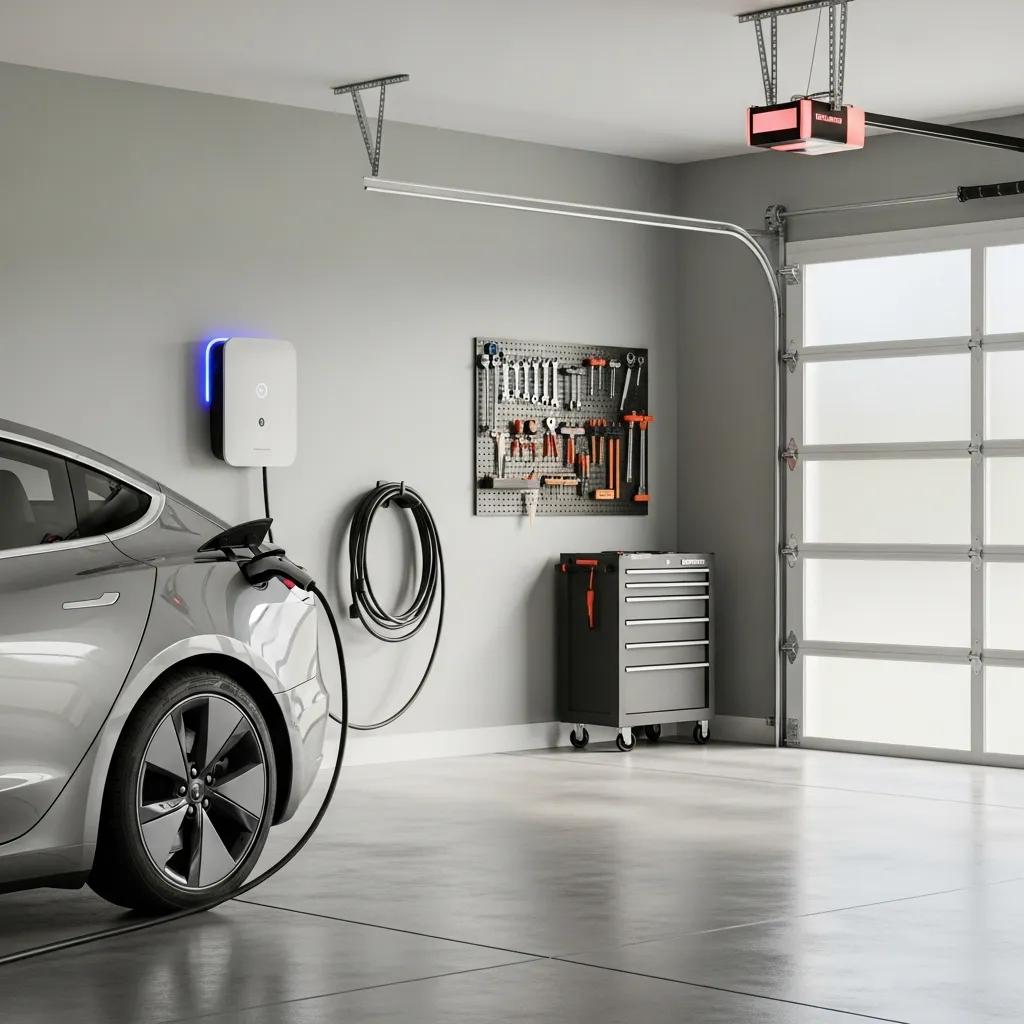
Expert Guide to Home EV Charger Installation in the Bay Area
Home EV Charger Installation in the Bay Area: A Homeowner's Complete Guide to Level 2 Chargers and Costs

As electric vehicles (EVs) become increasingly popular, homeowners in the Bay Area are looking for efficient ways to charge their vehicles at home. This guide provides a comprehensive overview of home EV charger installation, focusing on Level 2 chargers, which offer faster charging times compared to Level 1 chargers. By understanding the benefits, costs, and installation processes, homeowners can make informed decisions about integrating EV charging solutions into their homes. This article will cover the definition of Level 2 chargers, their advantages, installation costs, financing options, and the step-by-step process for installation.
What is a Level 2 EV Charger and Why Choose It for Your Home?
A Level 2 EV charger is a type of electric vehicle charging station that operates on a 240-volt power supply, allowing for significantly faster charging compared to Level 1 chargers, which use a standard 120-volt outlet. This increased voltage enables Level 2 chargers to deliver a charging rate of approximately 10 to 60 miles of range per hour, depending on the vehicle and charger specifications. Homeowners should consider Level 2 chargers for their ability to provide a full charge overnight, making them ideal for daily use.
Research further clarifies the specific power delivery capabilities that differentiate Level 1 and Level 2 residential EV chargers.
Residential Level 1 & 2 EV Charger Specifications
Although the couplers are specified for up to 690 V AC and up to 250 A at 50 to 60 Hz, Level-1 (up to 16 A) and Level 2 (up to 32A) are most commonly implemented [28].
Electric vehicle charging on residential distribution systems: Impacts and mitigations, A Dubey, 2015
Choosing a Level 2 charger for home installation not only enhances convenience but also increases the overall value of the property. With the growing adoption of electric vehicles, having a dedicated charging station can be a significant selling point for potential buyers.
Indeed, studies have shown a tangible increase in property values for homes equipped with EV charging infrastructure, especially in California.
EV Chargers Boost California Home Values
Our results show that access to charging infrastructure can be capitalized into property values. The average price premium for houses with EVCSs within 1 km is about 3.3% (or US$17,212) compared with homes without proximate EVCSs. The largest effect is a 5.8% increase for houses with EVCSs within 0.4–0.5 km compared with houses without proximate EVCSs.
Effects of expanding electric vehicle charging stations in California on the housing market, J Liang, 2023
How does a Level 2 EV Charger differ from other home chargers?
Level 2 chargers differ from Level 1 chargers primarily in their charging speed and installation requirements. While Level 1 chargers can be plugged into standard household outlets, they typically provide only 3 to 5 miles of range per hour, making them less suitable for daily charging needs. In contrast, Level 2 chargers can fully charge most EVs in a matter of hours, making them more efficient for homeowners who rely on their vehicles for daily commuting.
Additionally, the installation of a Level 2 charger often requires a dedicated circuit and may involve upgrades to the home's electrical panel, depending on the existing infrastructure. This contrasts with Level 1 chargers, which can be used with existing outlets without any modifications.
What are the benefits of installing a Level 2 EV Charger at home?

Installing a Level 2 EV charger at home offers several key benefits:
- Faster Charging Times: Level 2 chargers significantly reduce the time it takes to charge an electric vehicle, allowing for more convenient overnight charging.
- Increased Home Value: A dedicated EV charging station can enhance property value, appealing to potential buyers interested in sustainable living.
- Convenience for EV Owners: Home charging eliminates the need to visit public charging stations, providing a hassle-free experience for EV owners.
These advantages make Level 2 chargers an attractive option for homeowners looking to enhance their electric vehicle experience.
How Much Does Home EV Charger Installation Cost in the Bay Area?
The cost of installing a home EV charger in the Bay Area can vary widely based on several factors, including the type of charger, installation complexity, and local labor rates. On average, homeowners can expect to pay between $1,000 and $3,000 for a Level 2 charger installation. This price typically includes the cost of the charger itself, installation labor, and any necessary electrical upgrades.
| Installation Component | Estimated Cost |
|---|---|
| Level 2 Charger | $500 - $1,500 |
| Installation Labor | $400 - $1,200 |
| Electrical Upgrades | $200 - $2,000 |
Understanding these costs can help homeowners budget effectively for their EV charging needs.
What factors influence the cost of EV charger installation?
Several factors can influence the overall cost of EV charger installation, including:
- Electrical Panel Upgrades: If the existing electrical panel cannot support the additional load of a Level 2 charger, upgrades may be necessary, which can add to the installation cost.
- Permit Costs: Local regulations may require permits for electrical work, which can incur additional fees.
- Labor Costs: The complexity of the installation and local labor rates can significantly affect the total cost.
By considering these factors, homeowners can better prepare for the financial aspects of installing a home EV charger.
Are there financing options or rebates to reduce installation costs?
Homeowners in California may have access to various financing options and rebates to help offset the costs of EV charger installation. Some of the available options include:
- State and Local Rebates: Programs such as the California Electric Vehicle Infrastructure Project (CALeVIP) offer rebates for the installation of EV chargers.
- Financing Programs: Many utility companies and financial institutions provide low-interest loans or financing plans specifically for EV charger installations.
- Tax Credits: Federal tax credits may also be available for homeowners who install EV charging stations.
These financial incentives can significantly reduce the upfront costs associated with installing a Level 2 charger.
What is the Step-by-Step Process for Installing a Home EV Charging Station?

The installation process for a home EV charging station typically involves several key steps:
- Initial Assessment: A qualified electrician will assess the home's electrical system to determine the best location for the charger and identify any necessary upgrades.
- Installation Steps: The electrician will install the charger, which may involve running new wiring, installing a dedicated circuit, and connecting the charger to the electrical panel.
- Final Inspection: After installation, a final inspection may be required to ensure compliance with local codes and safety standards.
This structured approach ensures that the installation is completed safely and efficiently.
What permits and inspections are required for EV charger installation in California?
In California, installing a home EV charger typically requires obtaining specific permits and passing inspections. Homeowners should be aware of the following requirements:
- Electrical Permits: Most installations will require an electrical permit from the local building department to ensure compliance with safety standards.
- Inspections: After installation, an inspection may be necessary to verify that the work meets local codes and regulations.
Understanding these requirements can help homeowners navigate the installation process more smoothly.
How long does the installation typically take and what does it involve?
The installation of a home EV charger generally takes between 4 to 8 hours, depending on the complexity of the installation and any necessary electrical upgrades. Homeowners can expect the following during the installation process:
- Preparation: The electrician will prepare the installation site, which may involve clearing space and ensuring access to the electrical panel.
- Installation: The actual installation of the charger and any required electrical work will take place.
- Testing: Once installed, the electrician will test the charger to ensure it operates correctly and safely.
This timeline allows homeowners to plan accordingly for the installation day.
How Can You Benefit from California EV Charger Rebates and Incentives?
California offers various rebate programs and incentives to encourage the installation of EV chargers. Homeowners can benefit from these programs in several ways:
- Cost Reduction: Rebates can significantly lower the upfront costs associated with purchasing and installing a Level 2 charger.
- Increased Accessibility: Financial incentives make it easier for homeowners to invest in EV charging solutions, promoting the adoption of electric vehicles.
- Environmental Impact: By supporting the installation of EV chargers, these programs contribute to the reduction of greenhouse gas emissions and promote sustainable energy use.
Taking advantage of these incentives can enhance the overall value of the investment in EV charging infrastructure.
Which rebate programs are available for Bay Area homeowners?
Bay Area homeowners can access several rebate programs designed to support the installation of EV chargers, including:
- California Electric Vehicle Infrastructure Project (CALeVIP): Offers rebates for the installation of Level 2 chargers.
- Utility Company Programs: Many local utility companies provide rebates or incentives for customers who install EV chargers.
- Federal Tax Credits: Homeowners may qualify for federal tax credits for the installation of EV charging stations.
These programs can help reduce the financial burden of installing a home EV charger.
How do rebates affect the overall cost and installation decisions?
Rebates can significantly impact the overall cost of installing a home EV charger, making it a more attractive investment for homeowners. By reducing the initial financial outlay, rebates can influence installation decisions in the following ways:
- Lower Upfront Costs: Rebates can decrease the amount homeowners need to pay out of pocket, making it easier to proceed with installation.
- Increased Adoption: Financial incentives encourage more homeowners to consider EV chargers, contributing to a broader shift towards electric vehicle adoption.
- Long-Term Savings: By investing in home charging solutions, homeowners can save on fuel costs and increase the convenience of charging their vehicles.
Overall, rebates play a crucial role in facilitating the transition to electric vehicles in the Bay Area.
